

Executive War College Debrief: The Reality Facing Laboratory Leaders Today
Executive War College Debrief: The Reality Facing Laboratory Leaders Today
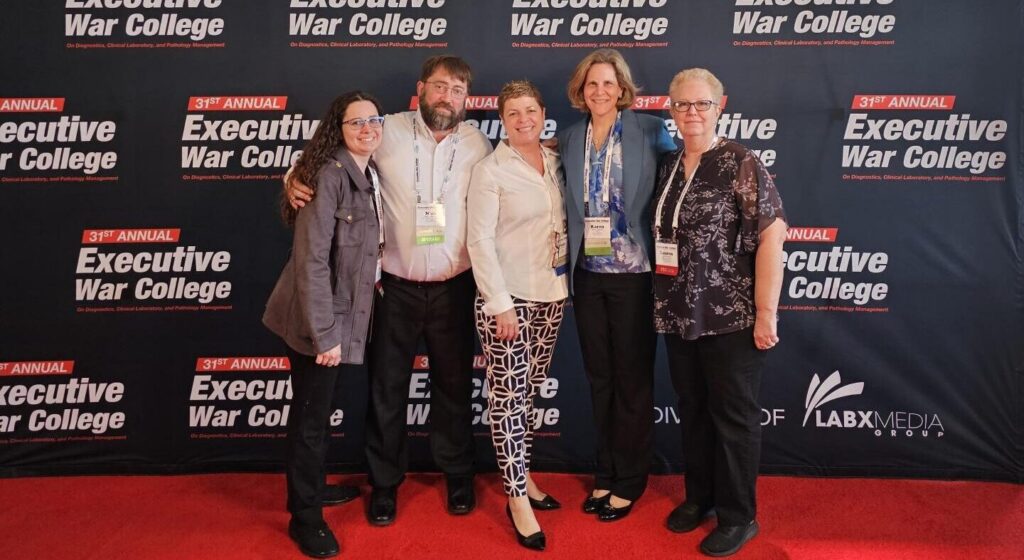
After attending Executive War College, one thing became clear: laboratories are being forced to adapt quickly as financial, operational, and regulatory pressures continue to intensify. Across sessions, peer discussions, and vendor demonstrations, the same themes surfaced repeatedly.
Financial Pressure Is Reshaping Laboratory Operations
Laboratories are operating in an increasingly difficult economic environment. Labor, supplies, and technology costs continue to rise while reimbursement remains flat or declines under ongoing payer pressure and Medicare cuts. The result is a growing imbalance where the cost per requisition is increasing while revenue per test continues to shrink. This financial pressure is driving organizations to evaluate operations with far greater discipline and urgency.
Productivity and Automation Are Taking Priority
The conversation around AI and automation was less about innovation hype and more about operational necessity. Qualified laboratory talent remains difficult and expensive to secure, and leadership teams are focused on improving throughput without increasing headcount. Organizations are investing in automation, workflow optimization, and productivity tools that reduce manual effort, improve consistency, and help teams scale efficiently without compromising quality.
Compliance Has Become a Business Continuity Issue
Compliance and risk management are now directly tied to financial performance. Laboratories cannot afford revenue disruption caused by audit findings, quality issues, or operational inconsistencies.
This is increasing demand for standardized workflows, reduced manual processes, and stronger operational governance supported by Lean and Six Sigma methodologies.
Digital Transformation Must Deliver Measurable Value
There is continued interest in cloud adoption and modern LIS and LIMS platforms, but organizations are evaluating these investments through a much sharper operational lens.
Technology decisions are increasingly driven by total cost of ownership, scalability, interoperability, and measurable business impact rather than simply modernization alone.
Interoperability and Integration Are Critical
Interoperability continues to be one of the industry’s largest operational challenges. Disconnected systems create delays, increase manual workarounds, and introduce unnecessary risk.
As consolidation accelerates across the industry, successful integration has become essential. Aligning LIS and LIMS platforms, integrating EMRs, mapping compendiums, and standardizing workflows are often the determining factors between successful growth and operational disruption.

Where U.S. HealthTek Fits In
Laboratories are no longer looking for isolated technology solutions. They are looking for strategic partners who can help align systems, workflows, and operations in ways that reduce risk and improve performance.
U.S. HealthTek works directly in the areas laboratories are struggling with most, including interoperability, LIS and LIMS strategy, workflow optimization, and integration support during complex implementations and mergers.
A Call to Action
The conversation coming out of Executive War College is no longer about whether these challenges exist. It is about how quickly organizations can respond.
The margin for inefficiency is shrinking, and laboratories that move decisively toward operational alignment, modernization, and integration will be best positioned for long-term success.